October 21, 2026

School board nixes raises for top brass
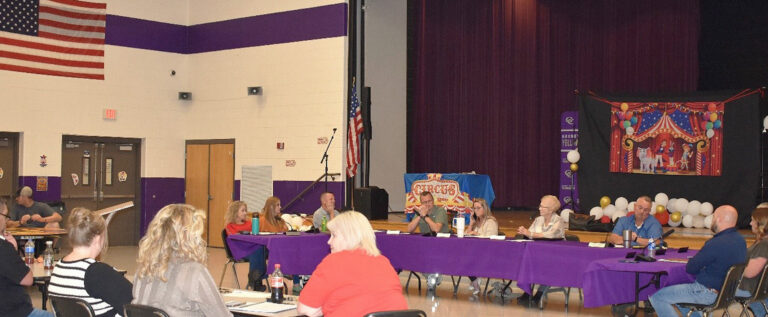
At the Grundy County Board of Education meeting on October 8th, the last order of business was a motion to give a $20,000 salary increase each to Dr. Donald Durley, Director of Schools, and Dr. Jennifer Barnett, Assistant Superintendent and Chief Financial Officer. It was said the funds were to be reallocated from the Director of Maintenance fund already in the budget. There was no second to the motion and the meeting ended.
Four days later, a special meeting would be called to address the motion, and the county would be in uproar over the proposal. Members of the board received innumerous calls, emails, texts, and comments online, most of which would serve to remind them that while the Director of Schools and Assistant Superintendent are already six figure positions, the average annual income in Grundy County falls between $20-25,000 and there are members of the help staff in the Grundy County school system who make less than current wages at a fast food restaurant. They asked why is this money in the budget when there are there are parking lots that need paving, leaking rooves, outof- order security cameras, no driver’s education, home economics, or marching band classes, and crowded classrooms due to the closing of Palmer and Coalmont elementary schools. They questioned why Dr. Durley’s contract was extended by four years when he still had two years left to fulfill his contract, and some were also enraged that the special meeting would take place at all, citing a cost of over $1600 for the Grundy County Board of Education to meet once again.
The meeting opened with citizens’ comments expressing anger for considering raising administrators’ salaries before bus drivers, cafeteria workers, janitorial and maintenance and “para-professional” positions; anticipatory admonishment for going against the general consensus of those who vote for the school board positions; and fair argument written in public speech or essay form. They asked, “When was the last time you got a raise without an evaluation?” and gave statistics such as Grundy County’s median household income of around $47,000 ranking position 89 out of 95 of counties in Tennessee, meaning that the majority of kids in Grundy County are considered “economically disadvantaged.” A man from Pelham delivered a litany of percentages comparing the Director of School’s salary against teachers, help staff, and other positions of importance in Grundy County and warned, “If you think it’s a good idea to give him and her a $20,000 raise you are sadly mistaken.”
In the deliberation of the Board, complexity to the issues with a theme of “multiple truths” unfurled. First, board member Lindsay Sitz expressed her disapproval of the meeting, calling it “reckless and unnecessary” to call a special meeting for a non-emergency situation – a motion that had simply failed in the last meeting and could be revisited in the next. She also commented that the cost to compensate the board for holding the meeting did not begin to cover the labor of hearing and responding to public commentary in the past three days. It was requested that the other board members who had called for or agreed to the meeting identify themselves and explain their reasoning.
There were five board members in cahoots to hold the special meeting. Colby Ladd was the first to come forward saying that the motion “did not sit right” with him, and revealed that it had come to the administration’s attention that Dr. Jennifer Barnett would be applying for another position in a different school district. Ladd went on to elaborate if Barnett accepted another position, he would be supportive of her decision and proud of her work in Grundy County and referenced a conversation with Barnett in which both were true: her love for working in Grundy County and the benefits of moving to a place with family ties to the area. With Barnett’s deadline to apply for the position scarcely over a week away, Ladd persisted, “This is the bridge that was placed in front of us, we have to cross it one way or another. If we had an opportunity to retain Dr. Barnett, I wanted to make sure we looked into it” and referenced “the hidden costs” of the rehiring process to justify the expense of the special meeting. “Where all of this came from,” he summarized, “was the urgency in maintaining the good financial standing with the CFO position under Dr. Barnett.”
Micah Atterton also defended the case for calling the meeting with some reprimanding for the reactive response from the community, “It makes me ashamed to see the way we act when we disagree…we’ve got a lot of issues across the board with our support staff, but there is also the benefit of Barnett…I do want to see what we can do for her. She does have a job opportunity, and it has a deadline, October 23rd. There has never been a CFO in this county who has done as good a job as she has. There have been years we have not known the budget, she knows [each] line item. The reason the teachers got the bonus [pay increase] is because she did the work. She is an asset.”
The remaining three board members confirmed that they held the same position: not to give out $20,000 salary raises but to offer some incentive to retain Dr. Barnett and described feeling blind-sighted by the motion at the last meeting. An audience participant inquired why was it on the agenda to deliberate raising the salary of both Durley and Barnett if they were only interested in discussing a pay raise for Barnett. Phyllis Lusk answered that How do we fix it? Was the motive behind the agenda in reference to the original motion “and you people chose to separate it.” It was never clarified if the motion to “reallocate” $20,000 each to Durley and Barnett from “the Director of Maintenance fund already in the budget” was due to misunderstanding of a controversial clause in Dr. Durley’s contract stating that his salary would be contingent upon the base pay of licensed staff members, implying that if they were given a raise, his salary would also be increased; or if had been in consideration that Dr. Durley, now listed as “Supervisor of Maintenance” on the Grundy County school district website had absorbed the position from which the funds had been made available. It was pointed out that in previous years DOS Jessie Kinsey presided over two extra schools on a salary of $85,000 and a “bare bones budget.”
It was also made known that Barnett’s annual salary of $115,000 was compensation for two positions, Assistant Superintendent and Chief Financial Officer, did not include “fringe benefits,” and that the position for which she had already applied according to comptroller reports from 2023-2024 would offer approximately $137,000 annual salary. Multiple members of the board described Barnett’s work to be worth every penny, and another two truths came to the surface: disparate pay between the administrative positions and the “help staff” and desperate need for Dr. Barnett’s expertise and service, especially if they were going to reevaluate the pay scale for Grundy County school system employees in next year’s budget, citing for example when it was brought forth the question of giving teachers a raise, Dr. Durley said “I may have to cut some positions” while Dr. Barnett was able to adjust the budget to raise teacher pay and extend the cap for raises from 21 to 30 years. They strongly believed they would need her help adjusting the pay scale for help staff effectively and accurately, however the anecdotal complaints of Grundy County residents were overpowering – stories, for example, such as I’ve been told that if a teacher is sick, the para-pro jumps in and teaches the class and figures it out. And they’re doing it for $19,000 per year. It’s not enough. And the compelling testimony of Mary Ann Hargis implored, If we give two people the whole cake and throw you crumbs… if we can’t keep bus drivers, sports staff… what are we going to do?
Tiffany Winton expounded on the conflict, “…I’m not here to give a $20,000 raise to anybody. We sit here because we were voted in. A lot of times in this job, we answer to the people who voted us in…we’re not going to make everybody happy. I answered all the messages I got, all the comments – there was a few comments that made perfect sense to me. I have to be a good steward of the county and tax payers’ money. I don’t take these people voting me in lightly. We are school board members; we are privy to things other people are not. But the majority was a huge boisterous ‘NO.’ It’s hard for me because we’re supposed to take care of the least of them – the para-pros, the cafeteria workers…these people are making what I made when I started in 2006. I can’t imagine…it’s hard for me to see a $20,000 raise for two people…I can’t look these people in the eye. I do believe Dr. Barnett is worth every penny that she’s making right now. I do believe she is a huge asset to this county. A zero-finding audit is almost unheard of. But I cannot, and I’ve prayed and thought about it… I want to keep Dr. Barnett. I think she’s an amazing employee. It would be silly for us to lose her. But I can’t give $20,000.”
Though citizen comments were closed, the sense of approval arose from the audience that they would also want to keep Dr. Barnett, even entertaining a pay raise so as to compare with the other job opportunity, as long as the raise absolutely did not increase Dr. Durley’s pay by proxy. The board almost stalemated with unsurety about the contract clause, yet dismayed by the idea of calling a special meeting to do nothing, urged someone to make a motion to do something. They differentiated that increasing a stipend portion of the salary would not be likened to a pay raise. Ladd made the motion to increase a stipend portion of Barnett’s salary by $5,000, and a second to the motion came from Shala Wohlgemuth. However, the board was not ready to vote until contacting “Scott, the attorney,” who did pick up the phone and assured them that the clause written in Dr. Durley’s contract that stated his salary relative to the base rate of teacher pay does not apply to the pay of Barnett’s position, either by raise or stipend increase.
The board then took a roll call vote which failed five to four. It was clear the voices of Grundy County had been heard and that there was fear of insult and injury, or even a resulting labor strike if so much as one more penny was allotted to a six-figure administrative salary. The takeaway of the meeting is that addressing and adjusting the employee pay scale in the budget for 2027 will be top priority in workshop at the beginning of December. However, the board may be in need of a new CFO to help re-structure next year’s budget.